Source pet skin care plastic jar for Cosmetics, Cream, and Food
Find 30 pet skin care plastic jar options from verified suppliers in China. Compare capacities ranging from 15ml to 400ml, customization features, and certifications like CE and ISO for cosmetics, cream, and food packaging needs.
Key considerations
Products List




Comprehensive Sourcing Guide
Strategic Sourcing Guide for PET Skin Care Plastic Jars
Navigating the global market for PET skin care plastic jars requires a disciplined approach that balances material science, regulatory compliance, and supply chain reliability. For procurement professionals, the core objective is to secure packaging that preserves product integrity while adhering to strict aesthetic and functional requirements. The following guide synthesizes observed market data and technical attributes to provide a framework for evaluating potential suppliers and specifications.
Technical Specifications and Material Attributes
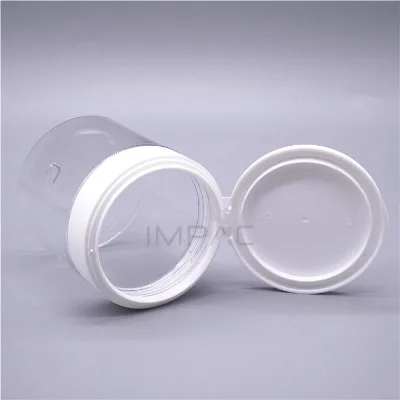
The foundation of any successful sourcing strategy lies in understanding the precise technical specifications of the product. In the context of PET skin care packaging, the material composition is paramount. The observed market data indicates that the primary material utilized for these containers is plastic, specifically PET (Polyethylene Terephthalate), which offers a favorable balance of clarity, strength, and chemical resistance.
When evaluating technical parameters, buyers must distinguish between standard and customized dimensions. The market presents a diverse range of capacities, from small 15 ml units to larger 300 ml and 400 ml variants. Specific model observations include capacities such as 50 ml, 60 ml, 100 ml, and 120 ml, alongside square and shaped bottle configurations. For instance, one observed specification lists a standard dimension of L65W65H90mm, while another defines a size of D92.5*H49.5mm. These variations dictate the internal volume and the external footprint, which are critical for shelf space planning and consumer ergonomics.
The shape of the jar is another critical variable. While round containers are common, the data highlights the availability of square shapes and specifically "shaped bottles," which often command a premium due to their distinct aesthetic appeal. The closure mechanism is equally important; observed attributes include dropper seals for liquid formulations and screw lids for cream-based products. Some advanced designs feature double-wall closures, which may offer enhanced insulation or structural rigidity.
Compliance and Certification Verification
In the skin care industry, regulatory compliance is non-negotiable. Procurement teams must verify that suppliers possess valid certifications that align with the target market's legal requirements. The observed data confirms that certain products carry CE certification, indicating compliance with European health, safety, and environmental protection standards. Furthermore, ISO certifications, including ISO9001 and CIQ (China Inspection and Quarantine), are present in the supply chain, suggesting a commitment to quality management systems and food safety protocols.
However, buyers must exercise caution. The presence of a certification in a general product listing does not guarantee that every specific SKU or batch holds that status. It is essential to request current, valid certificates for the specific model being ordered. For skin care products intended for export, verifying that the plastic material is food-grade or cosmetic-grade is vital. The data notes that some items are certified for "Food" usage, which often implies a higher standard of purity suitable for cosmetic applications, but this must be explicitly confirmed for the specific formulation being packaged.
Cost Drivers and Pricing Dynamics
Understanding the cost structure of PET jars is essential for budgeting and negotiation. The observed price range in the market is notably low, spanning from 0 to 1.5 USD per unit. However, this range is heavily influenced by the Minimum Order Quantity (MOQ). The data reveals a wide MOQ spectrum, ranging from as low as 10,000 pieces to as high as 30,000 pieces for certain models, with other observations suggesting a broader range of 200 to 30,000 units depending on the customization level.
Several factors drive the final unit cost. Customization is a primary cost multiplier. The market data indicates that customization is available for colors, logos, and packaging. Options such as silk screen printing, hot stamping, and labeling add layers to the production process. Additionally, the "Custom Packaging" attribute suggests that unique box designs or inserts will increase costs compared to standard carton packaging.
Lead time is another significant cost driver. One specific observation notes a lead time of 35 days for customized orders. This duration must be factored into the total cost of ownership, as longer lead times may necessitate higher safety stock levels or expedited shipping fees. Buyers should also consider the availability of samples; while some suppliers offer free samples in stock, customized samples may incur costs or require longer lead times, impacting the initial prototyping phase.
Typical Applications and Usage Scenarios
The versatility of PET skin care jars allows them to serve a broad spectrum of applications. The observed usage categories include cosmetics, creams, and food-related products. The specific closure types align with these applications; dropper seals are ideal for serums and liquid cosmetics, while screw lids with double-wall closures are better suited for thicker creams and lotions.
The material's transparency and ability to be colored (customized colors) make it suitable for high-end branding. The "Eco-Friendly" attribute observed in the data suggests that these jars may be recyclable or made from recycled materials, a growing requirement for modern beauty brands. The "Disposable" attribute noted for certain models indicates that some variants are designed for single-use or travel-sized applications, whereas others are intended for refillable systems.
Supplier Evaluation and Production Capabilities
Evaluating a supplier requires looking beyond the product listing to their operational capabilities. The data points to production origins in Zhejiang and Ningbo, China, which are established hubs for plastic manufacturing. Buyers should verify the specific factory location to assess logistics and potential tariffs.
Capacity is a key metric for supplier reliability. One observed specification lists a capacity of 300ml, but this likely refers to the product volume rather than the factory's monthly output. Procurement teams should inquire about the supplier's actual monthly production capacity to ensure they can meet demand during peak seasons. The "OEM/ODM" (Original Equipment Manufacturer/Original Design Manufacturer) attribute being acceptable is a strong indicator of a supplier's flexibility. This suggests the supplier can handle both private labeling and custom design requests, which is crucial for brands looking to differentiate themselves.
Quality Control and Inspection Protocols
Quality control (QC) is the safeguard against defects such as leaks, poor printing, or dimensional inconsistencies. The observed "Advantage: Good quality" is a generic claim and must be substantiated through a rigorous QC plan. Buyers should establish clear acceptance criteria based on the product standards, such as the specific dimensions (e.g., D78*H64MM) and sealing types.
Inspection should cover several stages:
- Raw Material Verification: Confirming the PET resin grade and ensuring it meets food/cosmetic safety standards.
- In-Process Inspection: Checking for mold defects, wall thickness consistency, and color uniformity during production.
- Final Inspection: Verifying the integrity of the sealing type (dropper or screw lid), the quality of printing (silk screen or hot stamping), and the accuracy of the packaging.
For customized orders, the 35-day lead time mentioned suggests a complex production cycle. It is advisable to schedule a pre-production sample approval and a mid-production inspection to catch issues early. The "Standard Carton Packaging" and "Custom Packaging" options should be inspected for durability to prevent damage during transit.
Long-Term Procurement Considerations
Sourcing is not a one-time transaction but a long-term partnership. Buyers should consider the scalability of the supplier. The wide range of MOQs (10,000 to 30,000 pieces) indicates that some suppliers may be better suited for large-scale, established brands, while others might accommodate smaller batches if the MOQ is flexible.
Sustainability is a growing long-term consideration. The "Eco-Friendly" attribute observed in the data should be leveraged. Buyers should ask for detailed information on the recyclability of the PET material and the supplier's environmental policies. Additionally, the ability to maintain consistent quality over time is critical. The presence of ISO9001 certification suggests a system for continuous improvement, but regular audits and performance reviews are necessary to ensure this standard is maintained.
Finally, the customization options for logos and colors offer a competitive advantage. As market trends shift, the ability to quickly adapt packaging designs—such as changing from square to shaped bottles or updating color palettes—will be a significant asset. Buyers should ensure their contracts allow for flexibility in design changes without prohibitive penalties or excessive lead times.
Comparative Overview of Product Attributes
To facilitate decision-making, the following table summarizes key attributes observed in the market data for PET skin care jars. This comparison highlights the variability in specifications that buyers must navigate.
| Attribute Category | Observed Variations | Key Considerations for Buyers |
|---|---|---|
| Capacity | 15ml, 50ml, 60ml, 100ml, 120ml, 250ml, 300ml, 400ml | Match capacity to product formulation volume; verify internal dimensions. |
| Shape | Square, Shaped Bottle, Round (implied) | Square shapes offer shelf stability; shaped bottles offer premium aesthetics. |
| Closure Type | Dropper, Screw Lid, Double Wall | Droppers for liquids/serums; Screw/Double Wall for creams/lotions. |
| Customization | Colors, Logo, Packaging, Printing | Silk screen, hot stamping, labeling available; verify print durability. |
| Certifications | CE, ISO, ISO9001, CIQ | Verify specific certificates for target markets (EU, US, Asia). |
| MOQ Range | 10,000 to 30,000 pieces (typical) | Lower MOQs may increase unit cost; negotiate based on volume. |
| Lead Time | 35 days (customized) | Plan inventory buffers; confirm timeline for rush orders. |
| Origin | Zhejiang, Ningbo, China | Assess logistics costs and import regulations based on origin. |
By adhering to these guidelines and rigorously verifying the provided facts against actual supplier capabilities, procurement professionals can secure high-quality PET skin care plastic jars that meet both functional and brand requirements. The key lies in balancing the observed market data with on-the-ground verification to mitigate risk and ensure supply chain resilience.
FAQs
What certifications are available for these plastic jars?
Available certifications include CE, ISO, ISO9001, and CIQ. Buyers must verify that the specific model ordered holds the valid certificate for their target market, as certifications apply to the product line rather than every individual batch automatically.
Can I customize the logo and color of the jar?
Yes, customization is available for colors, logos, and packaging. Options include silk screen printing, hot stamping, and labeling, allowing brands to create unique designs while adhering to the minimum order quantities required for custom production.
What is the typical lead time for customized orders?
The lead time for customized orders is typically 35 days. This duration accounts for the production cycle involving printing, molding, and packaging, so buyers should plan inventory buffers accordingly to avoid supply chain delays.
Which capacities are available for these PET jars?
Capacities range from 15 ml to 400 ml, including specific models like 50 ml, 60 ml, 100 ml, and 300 ml. Buyers should select the capacity that matches their product formulation volume and verify internal dimensions for compatibility.
What closure types are offered for different product forms?
Closure types include dropper seals for liquids and screw lids with double-wall closures for creams. The choice depends on the product viscosity, with droppers suitable for serums and screw lids ideal for thicker cosmetic formulations.
How does the minimum order quantity affect pricing?
The minimum order quantity ranges from 10,000 to 30,000 pieces, significantly influencing the unit price. Lower MOQs may increase the cost per unit, while larger orders typically secure better pricing within the observed 0 to 1.5 USD range.
Are these jars suitable for food and cosmetic usage?
Yes, the jars are certified for both food and cosmetic usage. The material is plastic, specifically PET, which offers chemical resistance, but buyers should confirm the specific grade required for their formulation to ensure safety compliance.